
Why Australia’s Surcharge Ban Accelerates the Shift to Multi-Rail Payment Infrastructure
Is your payment stack ready for the surcharge ban?
In March 2025, the Reserve Bank of Australia confirmed that surcharges on debit, prepaid and credit card payments across EFTPOS, Mastercard and Visa will be banned, starting from October 2026. This means Australian consumers will no longer be charged an additional fee at the point of sale simply for choosing to pay by card.
The RBA estimates the reform will save consumers around $1.6 billion in surcharge fees each year, with businesses saving a further $200 million. Alongside the surcharge ban, the RBA is also lowering interchange fee caps, which the Federal Treasurer expects to save businesses an additional $910 million each year.
According to the RBA1, surcharging is no longer achieving its intended purpose because it has become too difficult for consumers to avoid. Meanwhile, card payment fees are becoming unmanageable for businesses.

The cost of card dependency and single-rail payments
About 16 per cent of businesses currently apply a surcharge for credit card payments, according to the RBA. Thousands of Australians pay these fees when they buy coffee, pay at a restaurant, check out at a hotel or place an order with an online store, often without even being aware of it.
The change is intended to help consumers save money, but removing the ability to surcharge means businesses running payments through a single rail are exposed in a way they were not before. Every transaction carries a cost they may have to now absorb, and for low-margin categories like retail, hospitality, insurance and financial services, those basis points can compound quickly at scale.
The options are to raise prices (and risk losing customers), or find ways to reduce costs elsewhere.
For many businesses, a sustainable path forward involves reducing their reliance on expensive payment rails where practical, routing transactions to lower-cost alternatives where possible. Having the right payments infrastructure can be key to achieving this.
Offsetting the surcharge ban with multi-rail payments
It’s possible to collect payments without the need for credit card and EFTPOS payments.
For example:
- The New Payments Platform (NPP) and PayTo sit at the leading edge of real-time bank payments. PayTo, built on the NPP, allows businesses to initiate payments directly from a customer's bank account under a pre-authorised mandate. For recurring billing, subscriptions, loan repayments and high-value transactions, PayTo offers near-instant settlement, lower transaction costs than card networks, and strong certainty of funds. As surcharges are revoked and businesses look hard at their cost per transaction, the case for shifting eligible volume to PayTo has become more compelling.
- Direct Entry remains the backbone of high-volume, non-time-sensitive payment flows. When it comes to payroll, bulk disbursements, scheduled collections: Direct Entry handles these cost-effectively and reliably.
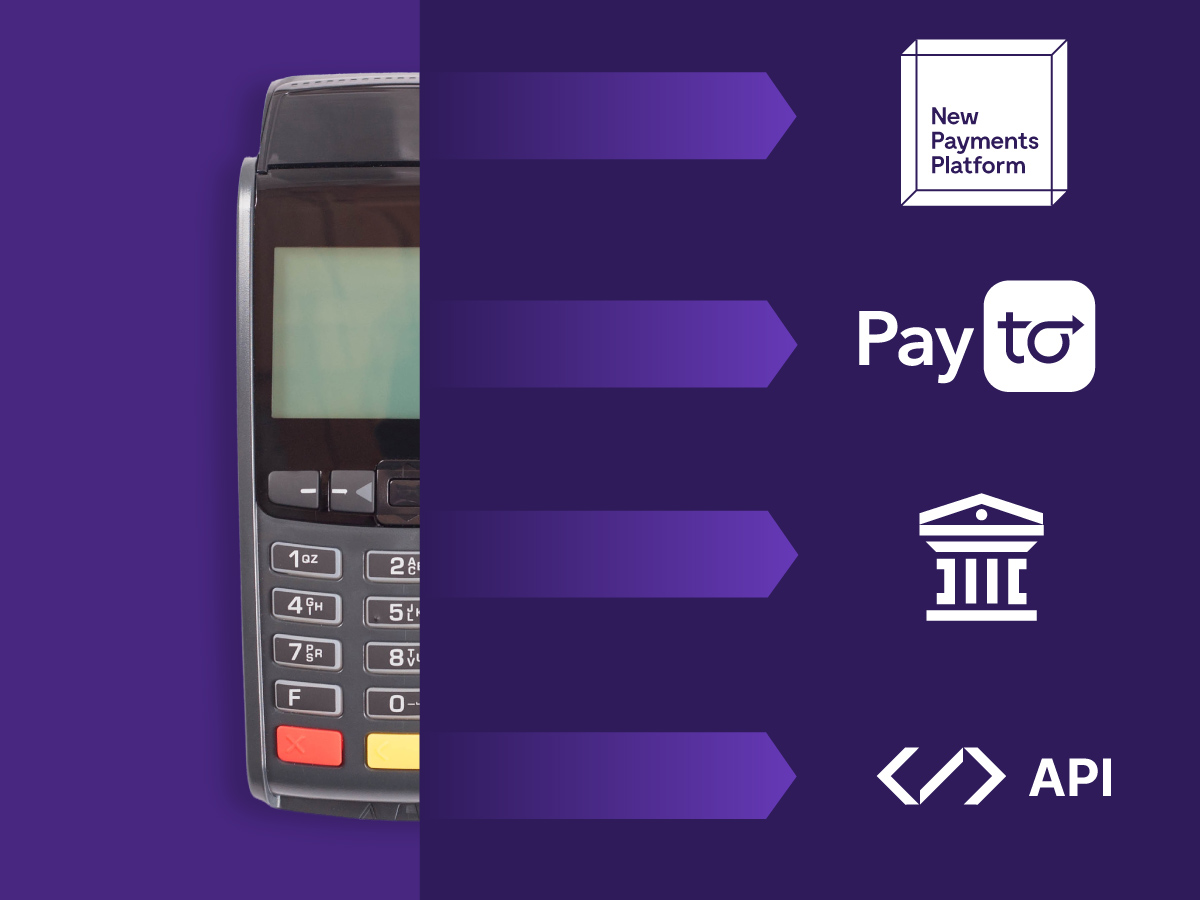
This is not to say that cards are going away. The point is not to eliminate cards, but to ensure every payment flowing through a card network genuinely needs to be there.
The opportunity lies in combining payment rails intelligently, routing each transaction in a way that best fits its cost profile, timing requirements and payment relationship.
Optimising multi-rail payments at scale
Access to alternative payment rails is only part of the equation. The real value comes from the ability to optimise across them automatically, at volume.
For example, a business processing tens of thousands of transactions a day is unlikely to make manual routing decisions for each payment. The infrastructure has to do that work: directing a recurring direct debit through PayTo where a mandate exists, processing batch payroll through Direct Entry, accepting cards for in-store purchases where no bank payment alternative is available, and reconciling everything centrally through a single platform.
This is the kind of orchestration modern payment infrastructure is designed to enable. One API layer that abstracts the complexity of multi-rail execution, and gives finance and product teams the levers to optimise for cost, speed and certainty simultaneously.
For businesses processing high volumes, shifting volume from cards to lower-cost rails can improve margins. Payment infrastructure can function as a lever to reduce payment processing costs.
Monoova technology: Supporting a surcharge-free future
The surcharge ban is a consumer protection measure, but businesses are now in a position where they have to adapt and confront payment costs they have previously been able to pass to consumers.
The question needs to be asked: Is our payment processing as efficient and cost-effective as it could be?
Rather than juggling multiple payment providers and gateways, each with its own integration, cost structure and reporting, Monoova brings everything together in one platform, leveraging an API to combine traditional account-to-account payments including direct debits, bank transfers, SWIFT, RTGS and BPAY with card payments, Apple Pay and Google Pay, alongside newer rails in the market like Osko, PayTo and PayID. Domestic or global, one-off or recurring, the full stack is accessible through a single connection.
That breadth matters in a post-surcharge ban environment. With Monoova, the infrastructure exists to route each transaction to the most cost-effective rail automatically, without operational complexity or a fragmented view across providers.
- For finance teams, that could mean lower transaction costs and cleaner reconciliation, as well as faster settlement and fewer failed payments.
- For the business overall, it means payment infrastructure that functions as a margin driver rather than a cost centre.
The future of payments requires infrastructure that makes that choice for you, automatically, intelligently and at scale.
The surcharge ban has made that infrastructure a necessity. Monoova makes it straight forward.
Reduce payment costs and prepare for Australia’s surcharge-free future with Monoova’s intelligent multi-rail payment infrastructure. [Talk to an Expert]
FAQ:
Q1: What is Australia’s surcharge ban?
A1: Australia’s surcharge ban prevents businesses from charging additional fees for card payments made through EFTPOS, Mastercard and Visa from October 2026.
Q2: How will the surcharge ban affect businesses?
A2: Businesses will need to absorb card transaction costs directly, increasing pressure to optimise payment processing and reduce transaction expenses.
Q3: What are multi-rail payments?
A3: Multi-rail payments allow businesses to process transactions across different payment methods and networks, including cards, PayTo, direct entry and bank transfers.
Q4: How does PayTo help reduce payment costs?
A4: PayTo enables real-time account-to-account payments with lower transaction costs than traditional card networks, making it ideal for recurring and high-value payments.
Q5: Why is payment orchestration important after the surcharge ban?
A5: Payment orchestration automatically routes transactions through the most cost-effective payment rail, helping businesses reduce fees, improve settlement speed and simplify reconciliation.
.png)
.png)
.png)