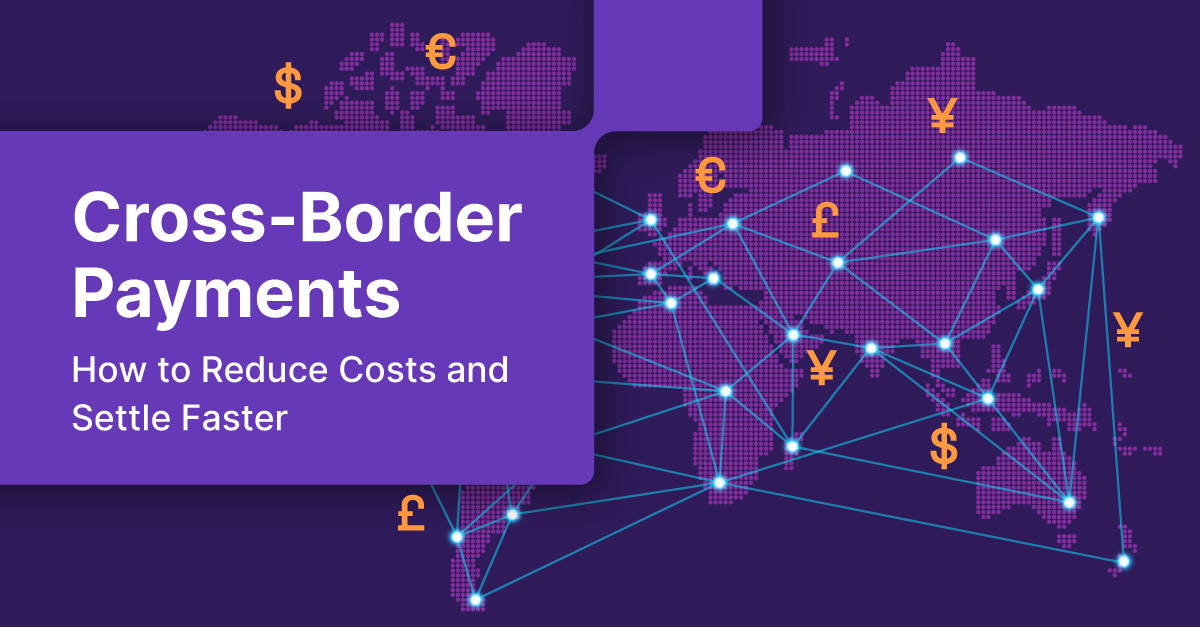

Cross-Border Payments: How to Reduce Costs and Settle Faster
For years, making international payments was slow, frustrating and expensive due to the complexity of cross-border payments.
For organisations handling high transaction volumes, these delays created real operational challenges and significantly impacted costs. Cash flow was hard to manage, reconciliation required manual effort and foreign exchange expenses would quickly add up.
Legacy banking infrastructure still relies on multiple correspondent banks, batch processing and limited hours, creating delays and complexity, but with Monoova, that entire process is managed on your behalf through a single, automated integration.
As global commerce accelerates, so do cross-border payment solutions. Modern options can be applied to reduce friction, lower costs and provide faster access to funds sent from overseas.
The new approach to cross-border payments
A new generation of international payments infrastructure is reshaping how businesses move money between international accounts.
Instead of relying on fragmented banking relationships and manual processes, modern cross-border payment services combine foreign exchange, global payment rails and domestic settlement into a single integrated platform.
This approach simplifies international payments in several ways, including:
Direct access to multiple liquidity providers
Modern payments systems help businesses to access competitive wholesale FX pricing through a network of financial institutions, rather than relying on a single bank relationship.
Integrated international and domestic payment rails
Funds can move across global networks and settle directly into local payment systems, removing the need for multiple intermediaries.
Automation and real-time visibility
APIs and automated reconciliation tools allow businesses to track and reconcile payments instantly.
Faster settlement through modern rails
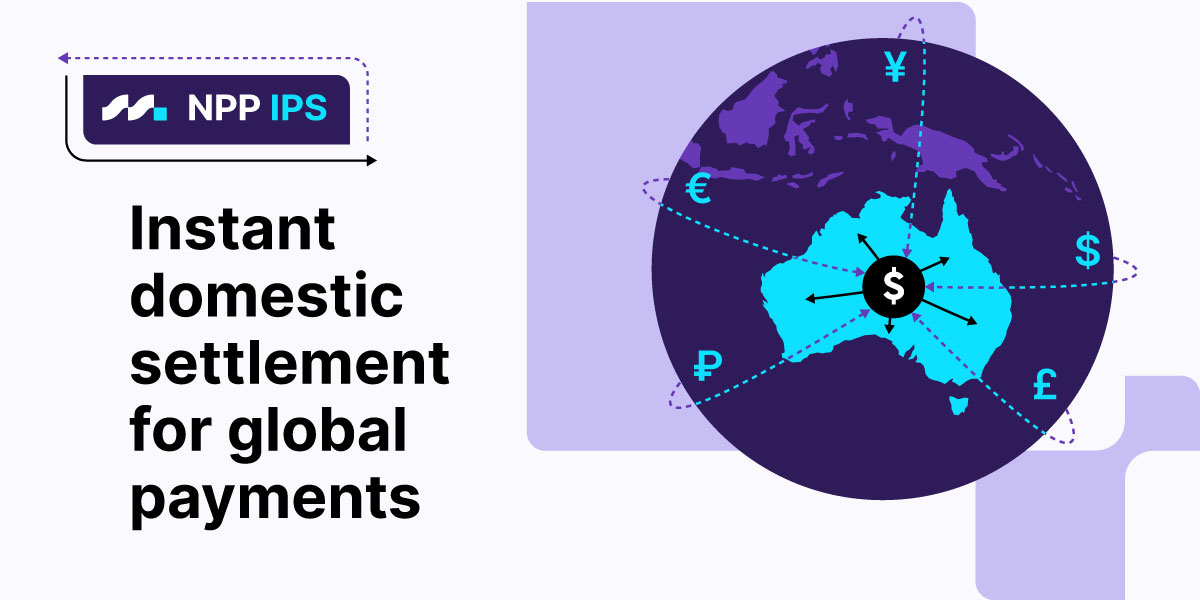
In Australia, the New Payments Platform’s International Payments Service (NPP IPS) enables near real-time settlement of inbound international funds into Australian bank accounts.
These innovations are transforming international payments from a slow, fragmented process into a faster, more efficient financial operation.
How Monoova delivers better international payment services
Monoova brings these innovations together through a fully integrated platform designed for businesses that move money at scale.
Rather than companies managing their multiple providers across FX, international transfers and domestic settlement for an international payment, Monoova combines everything into a single infrastructure layer.
Users have the benefit of:
Competitive wholesale FX rates
Through its global network of financial institutions, Monoova provides access to deep liquidity and competitive wholesale FX pricing. Businesses can trade major currencies, including USD, EUR, CNH, and GBP, while benefiting from more transparent pricing and reduced spreads.
For organisations processing large volumes of international payments, improvements in FX pricing can deliver savings over time.
Monoova also offers FX limit orders, allowing businesses to automatically execute trades when a chosen exchange rate is reached. This provides greater control over currency risk while reducing the need to constantly monitor market movements.
Faster settlement through NPP IPS
One of the biggest innovations in Monoova’s cross-border payments solutions is access to the New Payments Platform’s International Payments Service (IPS).

When international funds arrive in Australia through Monoova, they can settle instantly into local bank accounts via NPP IPS. This enables near real-time settlement 24/7/365 rather than relying on traditional batch-based clearing systems that can take one to three business days.
For high-volume use cases such as remittance, global payroll and investment platforms, this speed could improve liquidity and operational efficiency.
Read more: NPPS IPS explained: Instant domestic settlement for global payments
Integrated payment infrastructure
Monoova also simplifies international payment operations by consolidating domestic and international payments on a single platform.
Through a single API integration, businesses can streamline:
- Cross-border payments
- Foreign exchnage processes
- Reconciliation
Monoova’s unique platform also offers built-in security, compliance and transaction monitoring.
Dedicated FX dealer support
Corporate clients also benefit from personalised support through Monoova’s dedicated FX dealers. Businesses can execute trades via phone, chat, email or the online FX portal while receiving weekly market insights and guidance on currency movements.
For organisations managing complex global payment flows, this combination of technology and expert support improves both efficiency and strategic oversight.
Case study: powering global payments for Wise
As a global leader in the money transfer space, Wise needed the back-end support of a payments partner to facilitate international transactions for its Australian client base.
Monoova stepped in to provide an API that enables BPAY, direct debits and bank transfers, saving Wise from having to integrate and build individual componentry. This has delivered a great deal of cost savings for Wise in the go-to-market process.
Move money globally with greater speed and control
International payments do not have to be slow, expensive or operationally complex.
By combining global payment networks, wholesale FX access and near real-time settlement through NPP IPS, Monoova provides businesses with a smarter way to move money across borders.
For organisations handling large international payment volumes, the impact could be immediate: lower costs, faster settlement and simplified payment operations.
Talk to Monoova to discover how our cross-border payments solutions can help your business move money globally with greater speed and control.
FAQ
Q1: What are cross-border payments?
A1: Cross-border payments are transactions where funds are transferred between accounts in different countries, often involving foreign exchange and multiple payment networks.
Q2: Why are traditional international payments slow?
A2: Legacy systems rely on correspondent banking, batch processing and limited operating hours, which create delays and increase costs.
Q3: How can businesses reduce cross-border payment costs?
A3: Businesses can reduce costs by accessing wholesale FX rates, minimising intermediaries and using integrated payment platforms like Monoova.
Q4: What is NPP IPS and how does it help?
A4: NPP IPS (International Payments Service) enables near real-time settlement of inbound international funds into Australian bank accounts, improving cash flow and speed.
Q5: How does Monoova improve international payments?
A5: Monoova combines FX, global payment rails and domestic settlement into one platform, enabling faster payments, lower costs and simplified operations.