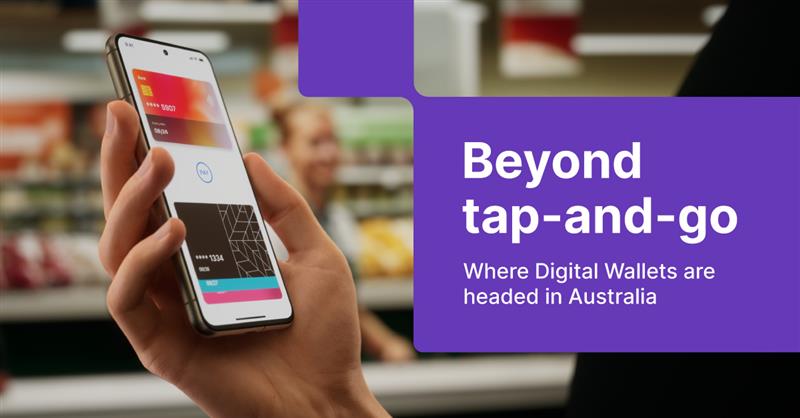

Beyond tap-and-go: Where digital wallets are headed in Australia
Australia’s payments landscape has changed dramatically over the past two decades.
For example, in 2007 people paid with cash around 70 percent of the time.1 By 2022, that figure had fallen to roughly 13 percent as EFTPOS, debit and credit cards took over.
The next leap came with contactless technology. Tap-and-go payments using NFC chips mean consumers can simply tap their card on a terminal, pay and walk away.
Thanks to the rise of smartphones, many Australians no longer carry a physical wallet. Mobile wallets let them store their payment cards directly on their phones or wearables and tap to pay wherever the technology is available.
The scale of adoption is striking, with reports saying Australians made more than 500 million mobile wallet payments in October 2024 alone, totalling over $20 billion.
We are gradually saying goodbye to cash and wallets, but what comes next in the world of payments?
The next phase of digital wallets
Digital wallets are now evolving into broader financial platforms that connect payments, identity and financial services in one place.2
Several developments are shaping the future of on-the-spot fund transfers:
Real-time account-to-account payments
One of the biggest shifts is the move towards real-time bank transfers.
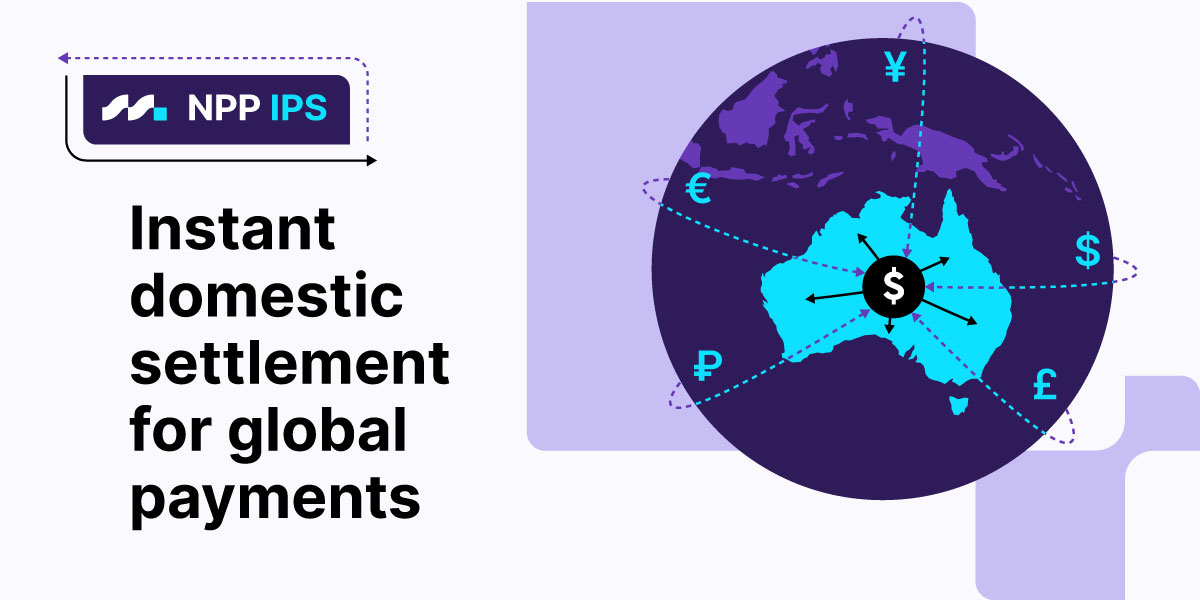
Australia’s New Payments Platform(NPP) allows payments between bank accounts to settle in real-time using services such as PayID and PayTo. More than 25 million PayIDs are reportedly registered across the country, highlighting the rapid adoption of real-time payments.
As digital wallets integrate with these real-time payment rails, consumers will increasingly be able to pay directly from their bank accounts rather than through card networks.
For merchants, this has the power to potentially reduce processing costs and enable faster settlement of funds.
Digital wallets for online payments
Digital wallets are also reshaping online checkout. Services such as Apple Pay and Google Pay allow customers to complete purchases with a single click rather than manually entering their details.
This significantly reduces friction at checkout. Faster payments mean fewer abandoned carts and a smoother buying experience. Adoption is growing quickly, with reports saying the adoption of digital wallets in Australia increased from 21% in 2014 to 39% in 2024, making them the primary payment method for e-commerce transactions.
The benefits go beyond convenience from a business perspective as digital wallets improve conversion rates and reduce the need to store customers’ sensitive card data. The result of correctly integrating this technology is likely to be a faster, safer checkout experience for customers and lower risk for businesses.
Wallets as digital identity hubs
Digital wallets are also expanding beyond payments. Platforms such as Google Wallet already allow users to store digital tickets, transit passes, loyalty cards and identification documents alongside their payment credentials.
As digital identity systems mature, wallets are likely to become a central interface for verifying identity, authorising payments and accessing financial services. A digital ID wallet, for example, is a secure application that allows individuals to store, manage and present cryptographically verifiable identity credentials. These ‘wallets’ will likely allow the holder to decide when, how, and what data to share, enabling identity verification without the need to upload entire documents or unnecessary personal information.
Digital Wallets + AI
Artificial intelligence is now finding its way into the world of digital payments.3
Traditional rule-based systems have limited applications, but as digital wallet usage grows, platforms are leveraging AI and machine learning to process huge transaction volumes, detect fraud in real-time and improve user experiences.
Instead of relying on static rules, such as blocking transactions above certain thresholds or flagging payments from specific locations, AI-driven systems can analyse multiple signals like user behaviour, device information, transaction history, and network activity. By evaluating this context in real time, AI is designed to calculates risk levels based on certain parameters and permit payments to proceed, require additional authentication or block payments.
One of the earliest and most important applications of AI in digital wallets is fraud detection. Machine learning models are designed to monitor transactions as they occur, comparing them with historical patterns to identify suspicious activity immediately. This helps platforms to stop fraudulent transactions before funds move, which is particularly important in real-time payment environments.
Why this shift matters for businesses
Around 50% of Australian businesses4 know their payment operations need to be upgraded, and leveraging digital wallets will be part of this, along with other technologies like real-time funds transfers.
As digital capabilities evolve into even more intelligent payment ecosystems, the implications for businesses extend far beyond accepting mobile payments.
Vendors and suppliers from across sectors can look forward to:
Fast, reliable payments
Real-time payment infrastructure can allow funds to move between accounts in real-time rather than relying on traditional settlement cycles.
When combined with intelligent transaction monitoring, businesses may be able to process high volumes of payments while maintaining strong security and compliance controls.
Low operational costs
AI-powered fraud detection may help reduce the need for manual transaction reviews while minimising false positives without creating unnecessary friction for legitimate users.
Smart customer experiences
AI will enable digital wallets to personalise financial services based on user behaviour and transaction data.
For businesses, this opens the door to more sophisticated payment experiences such as tailored payment options, automated subscriptions, embedded finance and contextual offers delivered directly through wallet platforms.
Preparing for the next generation of payments
As digital wallets and other technologies improve their capabilities, the underlying infrastructure must support massive transaction volumes while maintaining speed and reliability.
For businesses, the challenge is not just accepting digital payments and adapting to the rising use of digital wallets, but building the back-end systems needed to support what comes next. The challenge is that building be spoke systems is not cost-effective, and rapid change in the industry makes a large investment of time and money into building a risk.
Monoova helps organisations prepare for this future by providing the real-time payment infrastructure, automation and connectivity needed to operate in a rapidly evolving payments ecosystem. With the help of a single API, it allows vendors to receive, manage and pay funds in AUD in Australia in real-time.
Talk to Monoova to discover how our data-rich, real-time payments solutions are supporting businesses today and into the future.
FAQs
Q1: What is a digital wallet?
A1: A digital wallet is a mobile or software-based application that stores payment methods, allowing users to make transactions electronically without using physical cards or cash.
Q2: How are digital wallets evolving in Australia?
A2: Digital wallets are evolving beyond simple tap-and-go payments to include real-time bank transfers, digital identity, embedded finance and AI-driven fraud detection.
Q3: What role do real-time payments play in digital wallets?
A3: Real-time payments enable instant bank-to-bank transfers within digital wallets, improving settlement speed, reducing reliance on card networks and enhancing cash flow for businesses.
Q4: Are digital wallets secure for businesses and consumers?
A4: Yes. Digital wallets use advanced security features such as tokenisation, encryption and increasingly AI-driven fraud detection to protect transactions.
Q5: How can businesses prepare for the future of digital wallets?
A5: Businesses should invest in modern payment infrastructure that supports real-time payments, API integrations and scalable transaction processing to stay competitive.
[1] According to the Reserve Bank of Australia’s latest Triennial Consumer Payments Survey (CPS)
[2] McKinsey & Company – “State of Consumer Digital Payments 2024”
[3] https://www.finextra.com/blogposting/30987/ai-and-machine-learning-in-digital-wallets-from-fraud-detection-to-personalized-finance
[4] https://www.fintechaustralia.org.au/newsroom/new-report-finds-nearly-half-of-australian-businesses-plan-to-invest-in-digital-payments-over-the-next-12-months
.png)
.jpg)
.png)