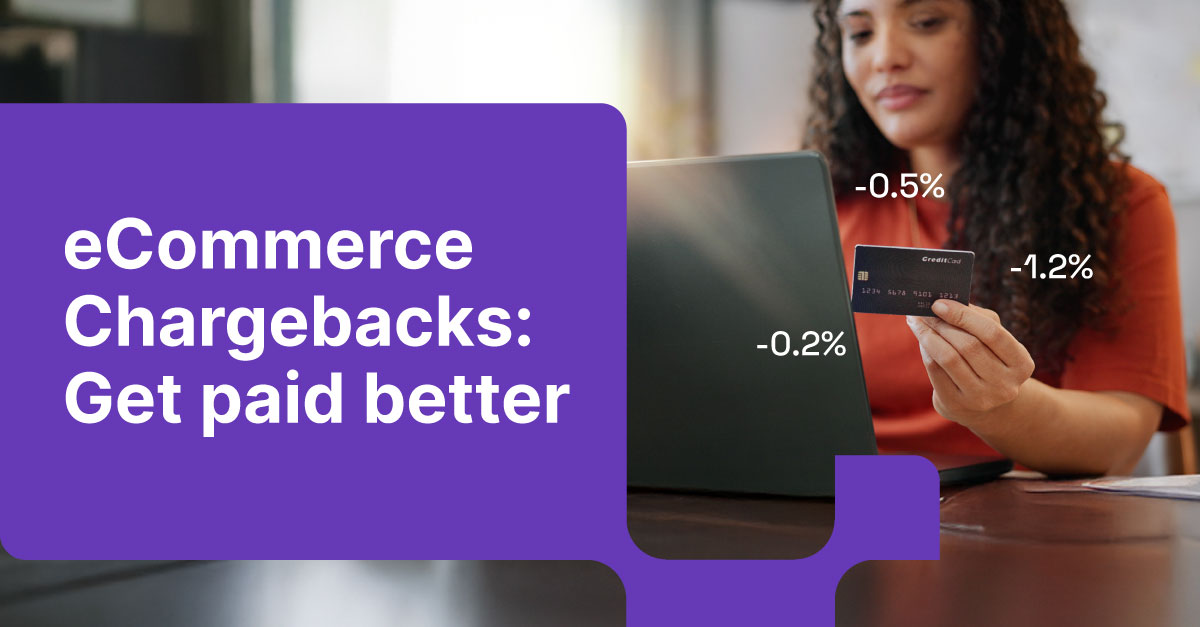

Tired of eCommerce chargebacks eating into your margins? There’s a better way to get paid
Unsubstantiated chargebacks are a frustrating challenge for eCommerce businesses. They’re a drain on revenue, a source of stress and a growing risk to profits. In an industry already working with tight margins and fierce competition, the last thing any retailer needs is to lose revenue after a sale is completed and a product is delivered.
Find out how Monoova is helping eCommerce businesses with this issue.
The eCommerce chargeback problem
A chargeback occurs when a customer disputes a card payment with their bank. They might claim they didn’t receive the product, that the item was faulty, or that their card was used fraudulently. In some cases, the reason is valid, but a significant portion of chargebacks, often referred to as ‘friendly fraud’, happen even when the product or service has been delivered as promised.
For example:
You may be a handbag retailer selling goods online. A customer places an order and pays with their credit card. The order is fulfilled and shipped on time, complete with tracking and delivery confirmation. A week later, the customer contacts their bank and claims they paid for items that never arrived.
Despite your best efforts to contest the chargeback and prove that the item was delivered, the bank rules in the customer’s favour. You lose the payment, absorb the chargeback fee, and now have to write off both the product and the sale.
The current system often works against merchants. Banks ultimately decide whether to honour a chargeback and they tend to side with the cardholder. For eCommerce businesses, this means time lost defending the claim, fees incurred through the process, and in most cases, revenue that’s difficult to recover.
According to chargeflow’s report, The Ultimate Chargeback Statistics 2025: Trends, Costs, and Solutions, one report, businesses lose up to 1.8% of revenue to fraud-related chargebacks. Meanwhile, the value of global chargebacks is set to rise from $33.79 billion in 2025 to $41.69 billion in 2028, a 23% increase in just 3 years.
Add to that the average 1.7% to 2.9% fee on credit card transactions, and it’s obvious that there needs to be a better way to trade.
The solution to chargebacks
Monoova helps eCommerce businesses protect themselves from chargebacks by offering payment methods that shift liability away from the merchant.
Instead of relying solely on card payments, Monoova enables merchants to accept account-to-account bank transfers via PayTo and PayID including BSB and account number. These modern, secure alternatives are initiated by the customer through their banking app. Because these payments are authorised directly by the customer and cannot be reversed without their bank’s involvement, the risk of chargebacks drops significantly.
If you’re an online retailer or providing any type of goods or services, using bank payments such as PayTo and PayID gives you more control. The liability shifts away from your business, and disputes are handled more fairly because the bank is now involved in both ends of the transaction. Telecommunications provider Launtel solved this very issue with PayTo and PayID. CEO Adam Poulten says: “Any chargebacks or disputed transactions with credit cards was becoming an issue for us… moving to PayID and Payto payments has really dramatically reduced that and now we’re getting all those transactions coming through now without any issues… so it’s been a great saving for us.”
Monoova can also generate unique PayIDs or BSB/account numbers for each order, making it easier to automate reconciliation, which has been a common barrier to adopting bank payments in the past. With instant payment confirmation and real-time settlement, you can receive payments sooner and fulfil orders with confidence.
Beyond chargeback protection, accepting bank payments through Monoova also offers significant savings. While card fees average 1.7% to 2.9% per transacton (and often include hidden costs across the payment chain), Monoova's bank payment methods have no hidden fees and are typically lower than the cost of accepting cards, hence improving your margins.

How to start leveraging Monoova to reduce eCommerce chargebacks
As an eCommerce retailer, you have two options to integrate Monoova. The first is to integrate our API and connect our technology with your retail platform.
If your brand uses Woo (previously WooCommerce), a solution is now available with a simple plugin. All you need to do is connect your account and you can start offering secure, real-time payment options that reduce the risk of chargebacks, without writing a line of code.
More no-code plugins are soon to be available across other major eCommerce platforms.
If you're tired of losing revenue to chargebacks and want a more reliable, cost-effective way to accept payments, it’s time to rethink how you get paid. With Monoova, you can protect your business without sacrificing customer experience.
Want to know more about how Monoova can help reduce chargebacks? Speak with a member of our team today.
Frequently Asked Questions
Q1: What is an eCommerce chargeback?
A1: A chargeback happens when a customer disputes a card payment with their bank, often after goods have been delivered.
Q2: Why are chargebacks a problem for retailers?
A2: They cost revenue, incur fees, and waste time defending claims.
Q3: How does PayTo reduce chargebacks?
A3: Payments are authorised directly by the customer in their banking app, shifting liability away from merchants.
Q4: Can I use PayTo on WooCommerce?
A4: Yes, Monoova’s Woo plugin makes it easy to integrate PayTo and PayID without coding.
Q5: Does Monoova support other eCommerce platforms?
A5: Yes, more no-code plugins are coming soon.


.png)