
Operating an export business means foreign exchange is a necessary part of doing business. But while currency can now move across borders faster than ever, receiving funds from international customers may lead to financial ‘leaks’, including through small margin hits, mistimed settlements and financial decisions made without clear visibility into rates. By the time the impact of these seemingly small issues registers on a balance sheet, the opportunity to manage them may have already passed.
That gap between when FX exposure is created and when it's actually managed is where most of the risk lives, and it has the potential to erode profits. One way to help close that gap is with a single FX Hub that can help offset the volatility of a cross-currency business.
The margin problem hiding in plain sight
Currency fluctuations don't need to be dramatic to be damaging.
A contract priced in USD, invoiced at one rate, and settled weeks later at another may initially look like a win but fail to deliver the expected results.
For exporters managing multiple international relationships, this timing mismatch can add up. Pricing can become uncertain, cash flow projections can lose reliability, and finance teams may spend disproportionate time reconciling outcomes against forecasts or quotes that were never quite accurate.
The problem affects businesses all over the world. One currency risk impact survey of North American and European companies tallied a collective negative impact of US$30.26 billion in a single quarter1.
The problem is rarely a lack of awareness. Most finance leaders understand currency risk in principle. The gap is usually operational: the tools available to manage FX exposure have historically sat separate from the payment workflows that create it.
Where traditional FX management falls short
Relying on a bank's FX desk can sometimes introduce friction at the wrong moments. Rates negotiated through traditional channels can sometimes be agreed reactively, after a payment obligation has already been confirmed, which may affect profit margins. Manual processes can mean visibility into live exposure is more limited, so decisions may get made based on outdated information rather than current rates. To add to this, when FX, payments and reconciliation run through separate systems, the administrative overhead can increase with every new currency relationship added.
For businesses with high transaction volumes or time-sensitive settlement requirements, these gaps can represent real cost and real risk that can accumulates across every cycle. As transaction volumes grow, businesses also need to consider the security and operational resilience of their payment infrastructure. Strong enterprise payment security controls can be just as important as competitive FX rates when managing international payment flows.
A modern approach to FX
The limitations of traditional FX management often come down to structure. Rate monitoring, conversion and reconciliation have historically operated as separate steps, handled at separate times, by separate teams or platforms, and that separation is where cost and risk can accumulate.
The problem can compound when these tools sit outside the broader payment workflow, because managing exposure may require intervention at every transaction, which takes time, introduces more potential for human error, and often happens too late to make a meaningful difference to the outcome.
Businesses looking to streamline payments and treasury operations can benefit from a more integrated approach to payment solutions that combines collection, conversion, settlement and reconciliation into a single workflow.
A more effective approach brings these elements together in one place:
- Real-time rate visibility means exposure can be assessed and acted on when a payment obligation is created rather than after the fact
- Embedding FX into the payment workflow helps conversion occur where the exposure is created, with rates locked at the point of execution.
- Automated conversion at the point of payment can help reduce the timing gap that may otherwise lead to unexpected revenue losses.
- Reconciliation is designed to reflect what actually occurred rather than requiring a separate process to account for the difference between what was expected and what settled, which can help reduce restrictive administrative overheads.
This can result in an export business better placed to keep up with the complexity of doing business across borders, with finance teams spending less time on manual management tasks and having clearer visibility over revenue.
Managing risk with a unified FX and payments structure
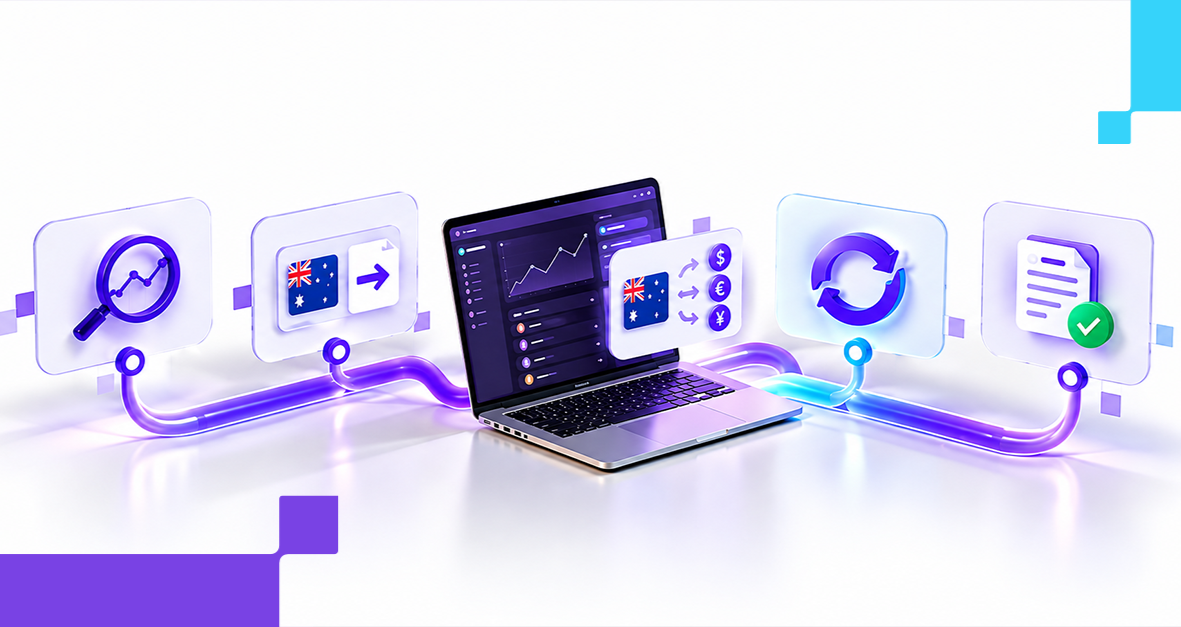
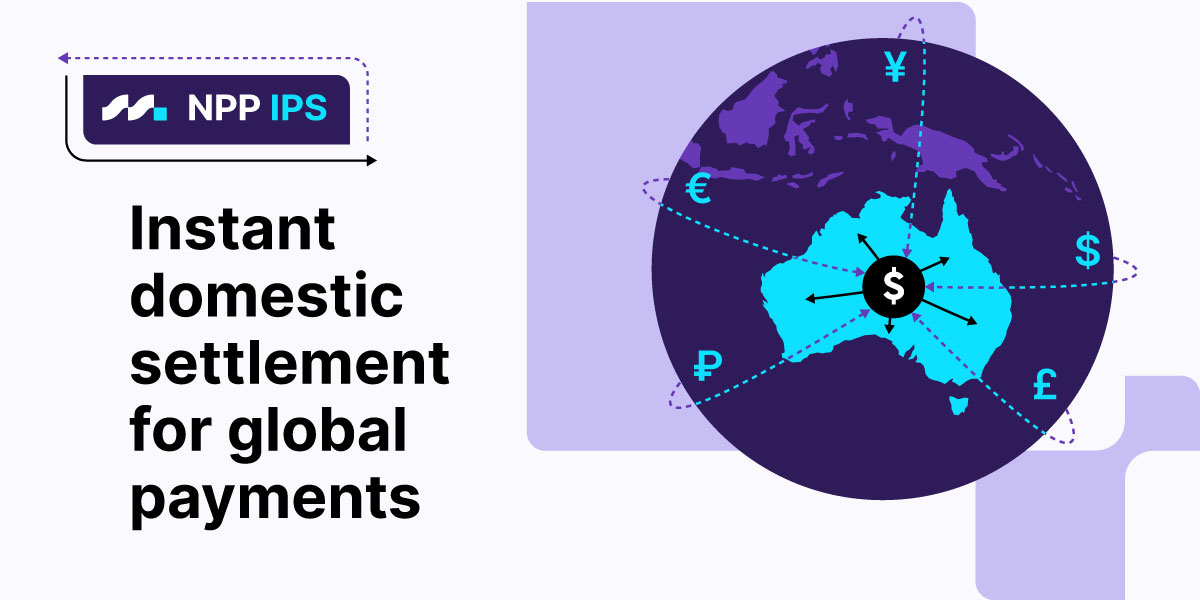
Monoova's FX Hub connects domestic AUD collections, currency conversion and global disbursement into a single, API-driven flow. Export businesses can leverage this to collect in real time via NPP payment rails including PayTo, PayID and OSKO, convert at live G10 rates without pre-funding, and settle to international beneficiaries in local currency often on the same day.2
The platform supports flexible execution across an FX portal, automated API or direct dealer access, with rate monitoring and conversion automated within the payment flow rather than managed as a separate process. Counterparty and liquidity risk is spread across a network of global banking and payment partners rather than concentrated in a single relationship.3
For Australian exporters managing multiple currency relationships, this approach is designed to help FX exposure be addressed earlier, support faster settlement, and reconciliation draws on a single, consolidated data source rather than outputs from disconnected systems.
See more: A single FX Hub for global money movement
Reduce FX risk and simplify global payments. Speak with Monoova's team to discover how an integrated FX Hub can help your export business improve visibility, streamline settlement and manage cross-border payments more efficiently.
1 https://www.ofx.com/en-au/blog/types-of-foreign-exchange-risk/
2 same-day settlement available for eligible currencies and within cut-off times.
3 Monoova Global (AFSL 421414) issues the relevant products. See the FSG/PDS for full details of the risks, terms and conditions that apply.

.png)